
Big homes can take some inspiration from tiny counterparts [Video]

From our television screens to our neighborhoods, tiny living has become one of the hottest new trends in real estate.

While it takes some dedication and creativity to dive into small real estate, bigger, more traditional properties can take some lessons from their tiny brethren.

For example, CNN Money reported some tiny home trends that make a lot of sense in any house. One such option is creative storage. Tiny homes have turned stairs into drawers and made hidden trap doors in the floors.

Dining room tables can appear out of nowhere and even walls can be moved – or removed – to change a floor plan. All of these are interesting and effective ideas for traditional real estate.

Which tiny home trend would you like to see in your house?

Prep your home before autumn hits [Video]

While it may still feel like the dog days of summer, fall is right around the corner. 

Hello again, and welcome back to our blog. 

Before autumn hits, you need to prepare your home for the changing seasons. This means tackling a few key maintenance challenges.

First, have your roof inspected by a professional. A leaky, damaged roof is never good, but it can be especially problematic in the colder seasons.

Second, clean out your gutters. Clogged gutters – just before leaves start to fall – could lead to flooding and drainage issues.

Third, seal your windows and doors. A nice, tight seal is good in all weather conditions, because it keeps your heating and cooling inside your home.

Thanks for watching, and check back soon for more tips and tricks.

Do I need a home inspection?

One question many first-time homebuyers may ask is "Do I need a home inspection?" If this sounds like you, just turn to any seasoned buyer and ask them. Their answer will be a very strong "yes." 

And there are a few great reasons why a home inspection is completely necessary. 

Read on to learn why:

It's your insurance policy
A smart way to think about a home purchase is that you're not just buying that awesome fireplace, that great master suite or that finished basement – you're buying every bit of termite damage, foundation cracks, roof leaks and any other problems that may be hiding in the house.

"It takes a keen eye to spot any problems beneath the surface."

This is one of the biggest reasons why a home inspection is so important. A licensed professional can come in to your prospective property and find all of these issues before you're financially committed to the home. That way you won't end up stuck with thousands of dollars in costly repairs the moment you move in. In most cases, homes look fantastic on the surface. It takes a keen eye to spot any problems underneath, and those are exactly the problems that you need to identify quickly. 

With a home inspection, you'll have that "insurance policy" against any unfortunate surprises after closing.

It's your negotiating tool
Another key reason why you need a home inspection is for negotiating power. Consider this example: You find a home listed at $300,000. You love it, skip the inspection, offer the list price and win. After moving in, you find out all the plumbing in the two-bathroom home needs to be replaced. Depending on the square footage, this could cost upward of $8,000 – a price you're now on the hook for. 

Now imagine you had that inspection. The professional inspector caught the plumbing issue before you offered list price. Now, you have leverage – you can either ask the seller to fix the plumbing and still pay list price, you can negotiate the seller down roughly $8,000 in anticipation of the repairs, or you can walk away. All of those are options because you had a home inspection completed. And one option that's missing? The one where you were left holding the bill for a massive plumbing repair job.

A home inspection puts the property under a magnifying glass.A home inspection puts the property under a magnifying glass.

It's your eyes and ears
Finally, a home inspection acts as your eyes and ears. The most common scenario when buying a new home isn't the massive repair projects, but more likely a handful of smaller repairs and cosmetic changes. By completing a home inspection, you now have the intelligence to create a plan. An inspector will clue you in to all the red flag issues that could appear down the road – the furnace is on its last legs, the roof should be replaced within five years, and so on. Without an inspection, you won't know where to budget and where to plan. 

In all likelihood, there will be flaws you accept and flaws you negotiate with the seller. An inspection will give you the insight you need to identify which are which, and also help you decide how you want to renovate and improve the property once you move in.

All in all, don't skip the home inspection. The cost of a home inspection typically runs between $500 and $1000, depending on how much you include – radon testing may be extra, for example – and the square footage of the property. Of course, get an inspection even for new construction as well. There may still be issues worth noting. Even with this upfront cost, the knowledge and power you'll get from a trusted professional is invaluable to you as a homeowner.

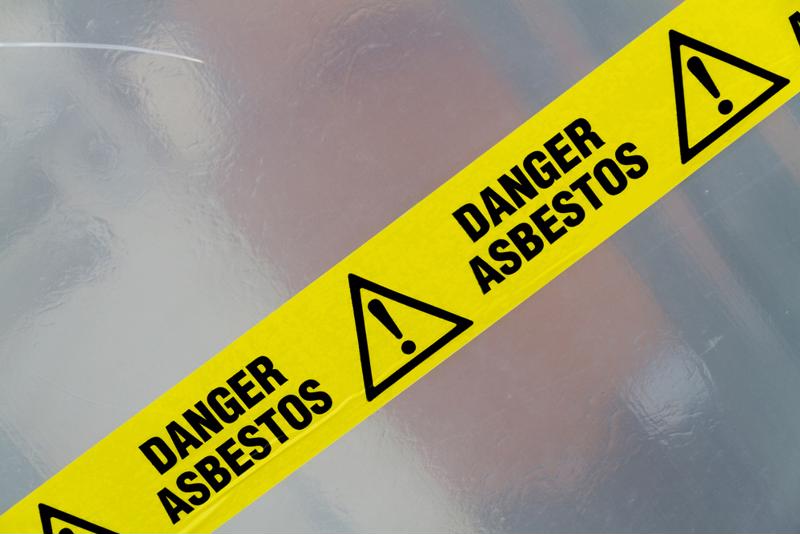
What if your home inspection uncovers asbestos?

Home inspection contractors have a large checklist they cover when combing over any property. From mold and water damage to electrical components and the foundation, inspectors pour over every piece of a property. While many issues are minor (a leaky toilet seal, a faulty light switch) a few problems can be significant. Once such concern is asbestos.

What is asbestos?
You might have heard of asbestos before. In simple terms, asbestos is a fiber that was once used in a number of different building materials. It has since been outlawed, but its former popularity means that it is still common.

"A number of older homes may have some asbestos within their walls."

This is why it is a common concern during any home inspection, renovation or construction project. 

While asbestos was once a desired material, it has since been identified as a key contributor to some cancers and other health concerns. Like lead paint, which we've covered before, once asbestos is identified in a home it needs to be immediately removed by a trained professional. It is just too dangerous to leave inside your property.

Furthermore, asbestos can be tricky to identify. Let your home inspector find the signs, and then get a sample sent off to a laboratory for further testing. If positive, a trained asbestos removal crew will need to be called in, making it even more crucial to catch any asbestos before you purchase a property.

Where is asbestos common?
Like we previously mentioned, asbestos was used in many different building materials. Over the years, it has found its home in cement mixtures, paints, tape, tile and much more. 

Several decades ago, asbestos was frequently used as insulation due to its many fire-resistant traits. As a result, many older homes today may have asbestos fibers left inside walls or wrapped around ductwork and pipes. Key places to check include behind drywall, if possible during an inspection, and near any ductwork – especially in the basement and the furnace. The fact that it was popular as insulation is another reason why renovations and construction projects increase asbestos risk.

If you have access points, ask your home inspector about any signs of asbestos in the attic insulation, near pipes in the bathroom and kitchen and around the furnace in the basement. Unfortunately, you won't have a concrete answer until you test any samples or check behind walls, but an inspector can give you an indication of whether your asbestos risk is high or low.

Make sure asbestos is inaccessible to your family or pets.Make sure asbestos is inaccessible to your family or pets.

What can you do?
Say you do find asbestos – what can you do? The good news is most materials containing asbestos are not too risky, especially if they are intact or undisturbed. It is only when asbestos is moved around that the fibers can be released into the air, posing a significant health risk. So, you do have time to plan your next move if you find it.

With that said, leave asbestos alone if it is in perfect condition. Trying to remove it only increases the danger. On the other hand, if the asbestos needs to be removed, follow these steps:

  1. Secure the area – don't let pets or children near the area. Block it off and keep it sealed for the time being.
  2. Don't clean it or vacuum – Trying to remove asbestos yourself can be dangerous.
  3. Call a professional – Trained asbestos removal crews will quickly and safely dispose of any asbestos materials, ensuring your home is safe for years to come.

Given the health risks of asbestos, trust only a local home inspection company to review your desired property for potential risks before you sign on the dotted line.

Perennials you can plant right now [Video]

Flowers are essential to most curb appeal strategies, lending home facades small pops of eye-catching color. If you’re looking to draw in buyers with some new blooms, consider planting perennials. As their name suggests, these plants flower for years, using elongated rootstocks to draw in extra moisture and reappear every growing season. 

There are myriad perennials to choose from, but savvy gardeners focus on a couple key species.

Most flower enthusiasts are attracted to classic perennials like black-eyed Susans and peonies. However, a number of others are just as beautiful and can make your flower bed more unique. For instance, Russian sage plants provide colorful canvases for smaller blooms, but also draw ample attention with their tall, pale-blue stems and wide bases.

Of course, blanket flowers are another good option. These durable wildflowers come in vibrant gold, orange and red hues and look similar to daisies.

Thanks for watching! Come back later for more homeselling tips.  

Pool cleaning tips you need to know [Video]

With summer in full swing, you must pay extra attention to you pool, as homebuyers will no doubt give it the once over as they pass through. To get ready for this scrutiny, you should probably refresh your water. Need some pool cleaning guidance? No problem.

First, begin with the basics. Skim the surface of the water to remove any floating debris and empty your built-in skimmer baskets. Then, grab your pool vacuum and clean up the pool floor – you want to move across the bottom in even, parallel strokes. Finish off the cleaning stage by scrubbing off any algae.

Next, check your pool chemicals. Find a pH testing strip to measure the water – you’re looking for a reading between 7.4 and 7.6. If your water is under 7.4, you will need to add soda ash to bump it up to a safe level. Are you seeing a pH above 7.6? Mix in some muriatic acid to bring it down.

Thanks for watching! Check back for more homeselling tips.  

How to protect your deck during summer [Video]

Planning to sell your home this summer? Your deck is definitely going to get some extra attention. To prepare, do some summertime deck maintenance so your outdoor relaxation area can withstand the literal and metaphorical heat.

Start off the process by addressing any grime. If potted plants take up a portion of your deck space, move them and clean up the wet soil that lies beneath. Then, find your plants a new home to prevent future buildup. Additionally, take care of anything that might lead to messy situations in the future. For instance, the grease that flies off food during backyard barbecues can stain deck surfaces, so attach a grease catcher to your grill or relocate it altogether.

Once you’ve tidied up, move onto protective measures. Make sure your deck is sealed against the elements and destructive organisms. Apply water repellent to keep moisture from penetrating your planks and slap on some wood preservative to address possible insect activity.

Thanks for watching! Stop by later for more homeselling tips.

How to safely remove lead paint [Video]

Lead paint is a serious safety hazard and can cause major health problems, including lead poisoning. If your home is coated in the toxic mixture, you should remove it as quickly as possible.

Though there are many methods for dealing with lead paint, removal is the most effective option. To begin, gather the proper materials. You’ll need protective gear, such as a disposable respirator, goggles and gloves. Next, pick up plastic wrap and tape to protect surfaces and prevent toxic paint chips from drifting into crevices. Additionally, before you begin, move out all of your furniture and personal items.

Wet sanding is the best method for removing lead paint. For this, you’ll also need a sander and a spray bottle filled with water.

Start the removal process by applying a coat of water to the wall and sanding slowly to prevent large clouds of paint dust from forming. Once you’ve stripped the surface, perform a thorough clean up and roll on a new coat of lead-free paint.

Thanks for watching and be safe.

3 pool cleaning tips for summer

Swimming pools offer sweet salvation from the sticky summer heat. Of course, these sparkling blue saviors require a lot of maintenance, and for good reason. Every year, thousands of Americans contract recreational water illnesses while swimming in contaminated pools, according to the Centers for Disease Control and Prevention. 

Before organizing your next backyard bash, review these essential pool cleaning strategies:

Deal with debris
Most pool owners find floating debris to be an aesthetic blight and nothing more. Unfortunately, this simply isn't the case, as pool debris contaminates water with harmful bacteria. Fortunately, there's an easy fix to this common problem: skimming.

You've probably got a stock, hand-held pool skimmer that can do a decent job. But if you want to perform a more thorough cleaning, you can always modify your skimmer by stretching a pair of nylon stockings around its baskets, Trulia reported. This will enable you to scoop up smaller particles, including dirt, sand and stray human hair.

After you've collected all the debris you can, be sure to dispose of it far away from your pool – you don't want a sudden gust of wind undoing your work. Additionally, if you find yourself regularly skimming for leaves or other organic bits from nearby shrubbery, consider relocating those plants, This Old House suggested.

Keep your pull clean by regularly skimming it for floating debris.Keep your pull clean by regularly skimming it for floating debris.

Pump and vacuum
Most in-ground pools come equipped with pumping and vacuum systems. The latter are especially effective for cleaning up submerged debris stuck to the pool bottom. To get started, connect your vacuum attachment to its accompanying hose, then submerge both. You want water to pour out of the free end of the hose. Finish up by attaching that end to one of your built-in pull skimmers.

When vacuuming, move across the bottom of the pool using long, parallel strokes. The entire process should take around 30 minutes.

Unlike vacuums, pool pumps do all the work on their own. However, they still require occasional maintenance. You should regularly clean your pump filter and monitor its performance. Even if your pump is up to par, you might consider swapping it for an energy efficient model. Your pool pump can account for as much as half of your total home energy consumption during the warmer months, NBC News reported. If you'd like to improve your home's overall energy efficiency, adopt a pump with less horsepower – a 0.75 horsepower model will work just fine, according to the Department of Energy.  Additionally, switch out your current filter for a larger version that can catch more debris.

If you're weary of making drastic changes to your pool pump setup, you could always install a timer to facilitate more efficient cycling periods. Of course, keeping intakes clean and free of debris will also help, as your pump won't have to work overtime pushing pool water through clogged grates.        

Consider water quality
Getting rid of visible contaminates is only half the battle – you must also address microscopic bacteria. Seemingly clean pools can contain harmful bugs, such as E.coli, or incubate and spread illnesses from sick pool goers. Chlorine is obviously the solution here, as the chemical kills bacteria and puts an end to algae.

Chlorine kills harmful bugs and puts an end to algae.

There are several methods for dispersing chlorine in pool water. However, most people opt for easy-to-use chlorine tablets, which are normally placed in built-in pull skimmer baskets. Once you've added the recommended dose, be sure to test your pool pH levels. Readings from 7.4 to 7.6 are ideal. If you get something out of this range, adjust your water by adding muriatic acid for pH readings above 7.6 or soda ash those under 7.4. Test your water a couple times a week to make sure you're in a good spot and maintaining a healthy aquatic environment. Your swimming companions will thank you.

Montgomery Country legislators pass new radon testing regulations

In November of last year, local legislators in Montgomery County, Maryland passed legislation requiring homesellers to test for radon and make the results available before putting property on the market, The Washington Post reported. Montgomery County is the first local government in the U.S. to enact such a law.

The Greater Capital Area Association of Realtors protested the legislation, arguing that it served little purpose, as most buyers make radon testing a condition upon sale. The organization also contended that current state legislation, which mandates that sellers disclose radon problems to buyers, effectively addressed the issue.

Legislators, along with officials at the Montgomery County attorney's office, asserted that buyers needed further protections.

"We are just asking people to test," Councilman Craig Rice, the bill's sponsor, explained in an interview with American University Radio. "Just to make sure that they know what may be lurking in their homes unknown that might be a silent, deadly killer."

"Legislators in Montgomery County, passed legislation requiring homesellers to test for radon."

Radon is an invisible, tasteless and odorless radioactive gas that forms in soil and groundwater deposits, according to the Environment Protection Agency. The gas usually invades homes through cracks in their foundation and can cause lung cancer in adults and children. In fact, an estimated 21,000 people die each year as a result of radon-related lung cancer.

Radon is an especially serious problem in Montgomery County, as it's centered on an area that exhibits higher than average radon levels, Bethesda Magazine reported. Indeed, the EPA considers the municipality a Zone 1 risk, meaning local radon levels exceed 4 picocuries per liter. Most public health authorities, including the EPA and World Health Organization, consider readings above 2.7 Pci/l unsafe.

The new legislation goes into affect October 16.

Radon testing kits cost as little as $15 a piece. However, most experts advise homeowners to schedule radon testing with a local home inspection company.